Espresso Tasting Guide: Simple Flavor Calibration at Home
By Aisha Khan • 6th Sep
What to do
Calibrate espresso at home by tasting in a repeatable order: smell, sip, describe broad sensations, refine them with a flavor wheel, record intensity and preference, then decide whether an adjustment is needed. The goal is clearer decisions, not a universal recipe or perfect score.
- Start with: Ask one focused question, then note aroma, basic taste, texture, and aftertaste before reaching for specific descriptors.
- Then: Move from broad flavor families to specific terms only when they genuinely fit. Compare the result with a previous clear note and keep your preference separate from description.
- Important prerequisite: Use defined references carefully: aromatic references are for smelling, not ingesting. Timing can be logged, but the collected evidence does not establish a universal 30-second rule; one practitioner's guidance treats timing as useful for beginners but not best practice by itself.
This espresso tasting guide is for mornings when a shot tastes "off," but you do not have the bandwidth for a complicated troubleshooting session. Coffee flavor calibration is simply the practice of noticing the same things in a repeatable order, then naming them clearly. It will not hand you one perfect recipe. It will give you a calmer way to decide what you are tasting, and what, if anything, to adjust next.
The win is not becoming a professional taster. It is reaching a useful, low-friction verdict before work: pleasant and balanced for me; bright; bitter; drying; thin; or worth changing. Less fiddling, more sipping. Your morning deserves frictionless espresso.
What calibration is, and what it is not
At home, calibration means building a shared reference point between today's cup, yesterday's notes, and perhaps another person at the table. Professional-style descriptive assessment separates what is present - aroma, flavor, texture, and aftertaste - from whether you like it. Keep that distinction. It prevents the common dead end of calling a coffee "bad" when you really mean "not what I want on a Tuesday."
A simple note can hold both:
- Description: citrus-like aroma, noticeable bitterness, syrupy texture, drying finish.
- Preference: I enjoy the aroma, but the finish is too drying for my everyday drink.
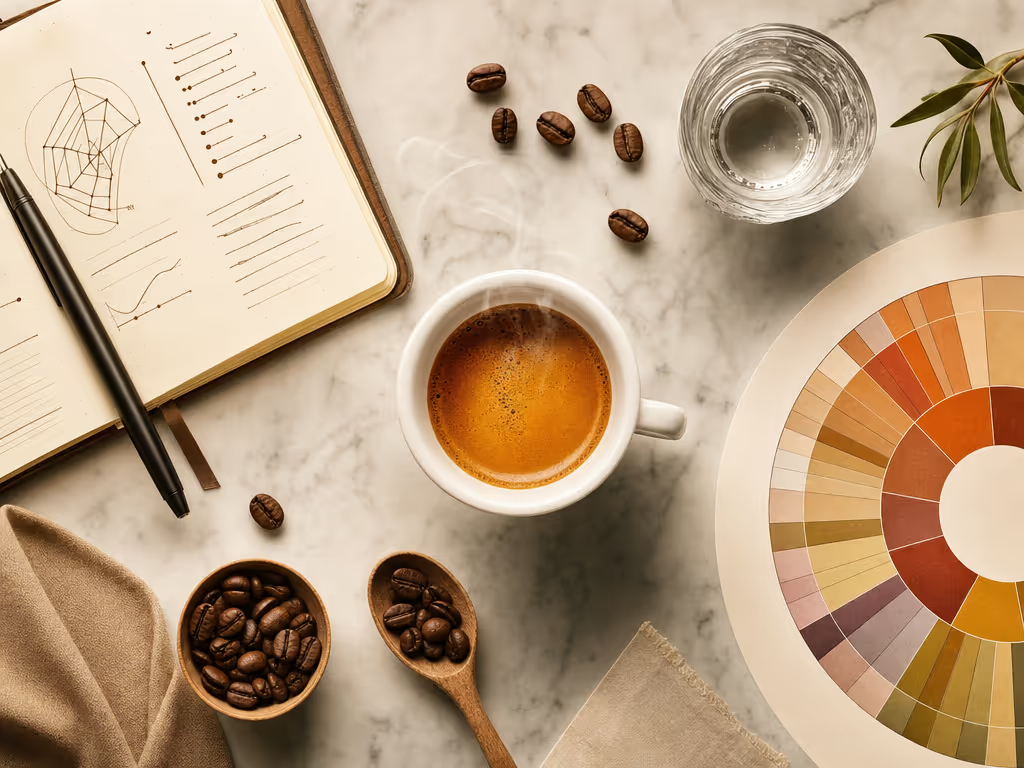
The Coffee Taster's Flavor Wheel is useful here because it gives you a route from broad to specific language. Start in the center with a general family, then move outward only as far as you can honestly support. "Fruity" may become "citrus fruit," then perhaps "lemon" or "orange." If it does not become more specific, stop at fruity. Precision is helpful; invented precision is not.
The goal is a repeatable observation, not an impressive-sounding tasting note.
Your 8-minute tasting practice routine
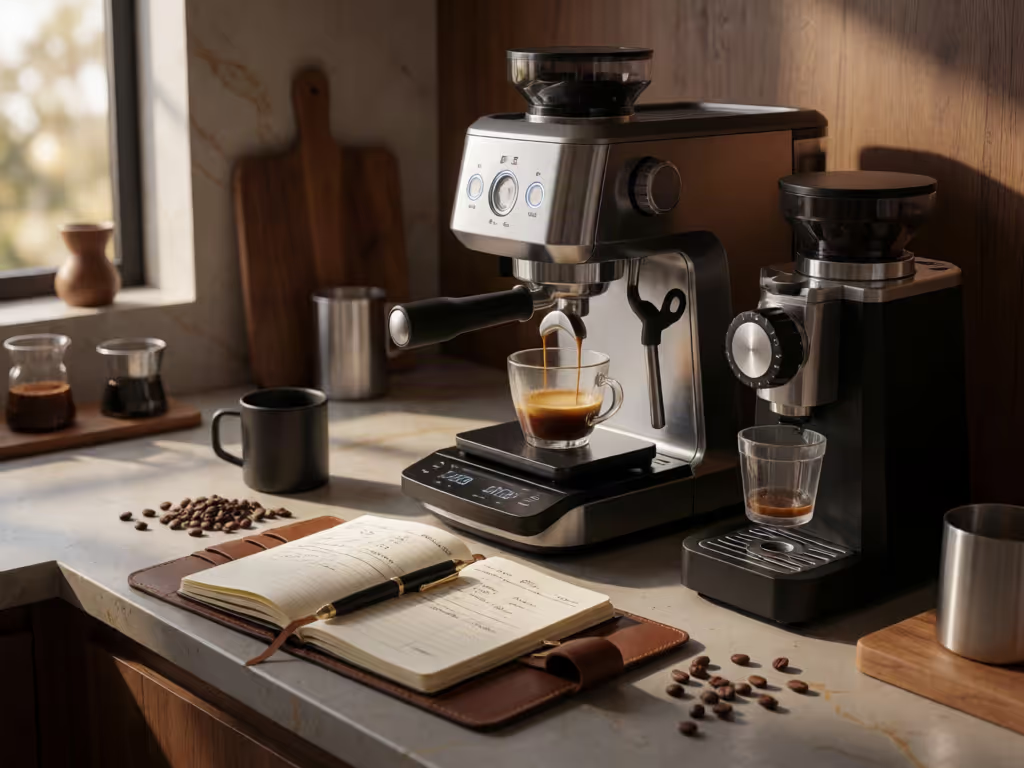
This is a practical home tasting exercise, not a scientifically validated protocol. Use your normal espresso setup and the same coffee when you can. For a deeper look at how roast profile, freshness, origin, and blend choice shape the cup, see our espresso bean selection guide. The structure matters more than creating an elaborate tasting station.
0:00: Set one question
Before pulling a shot, write one question in a note on your phone or a small card:
- Is the finish more bitter or more drying than yesterday?
- Does this coffee seem fruit-forward, roast-forward, or neither?
- Is the texture lighter, fuller, or similar to my last good cup?
Quick win: Ask only one question per session. A rushed family kitchen has enough moving parts already. I once watched a "better" machine lose the weekday contest not on taste, but on the noisy, splashy cleanup surrounding it. A tasting routine should reduce that same kind of friction, not add a new chore.
1:00: Smell before you sip
Pause and smell the espresso. Then take a small sip, let it move across your mouth, swallow, and notice what appears as you exhale. Flavor is not limited to what the tongue detects: aroma compounds released in the mouth can travel toward the olfactory system during exhalation. That retronasal aroma is one reason a coffee can feel far more complex than a list of basic tastes. If you want to understand the reactions behind those changing flavors, explore our guide to espresso extraction chemistry.
Write one or two broad observations first:
- aroma: nutty, fruity, roast-like, floral, or uncertain
- taste: sweet, sour, bitter, salty, or uncertain
- texture: light, creamy, syrupy, or drying
"Uncertain" is a valid result. It is much more useful than copying a descriptor you cannot perceive.
2:00: Use the espresso flavor wheel from center to edge
Open an espresso flavor wheel or the Coffee Taster's Flavor Wheel and work outward. Think of it as a prompt, not an answer key.
Use this if-then sequence:
- If a broad family jumps out, record it: fruity, nutty/cocoa-like, sweet, roast-like, or another broad category you can identify.
- If you can narrow it without guessing, move outward one level.
- If two descriptors feel plausible, write both and mark them tentative.
- If nothing fits, record the sensation plainly: "sharp," "dry," "heavy," or "hard to place." Return later with a larger vocabulary.
World Coffee Research's Sensory Lexicon covers 110 coffee flavor, aroma, and texture attributes and includes definitions and reference materials for understanding intensity. You do not need to memorize it. Its value at home is giving a word a stable meaning when your own shorthand ("that jammy thing") stops being enough.
3:30: Score intensity simply, then separate preference
Choose a small scale you will actually reuse. For example, mark each item as low, medium, or high:
| What you notice | Today's level | Plain-language note |
|---|---|---|
| Sweetness | Low / Medium / High | |
| Acidity or brightness | Low / Medium / High | |
| Bitterness | Low / Medium / High | |
| Texture | Light / Medium / Full | |
| Drying sensation | Low / Medium / High | |
| Aftertaste | Short / Medium / Long |
Then add one separate line: Would I happily drink this again today? Why or why not?
This small split is powerful. Two people can accurately notice bitterness but differ completely on whether it makes the espresso enjoyable. The shared vocabulary supports the conversation; it does not require identical preferences.
5:00: Run one safe reference exercise
The best sensory calibration exercises are modest and repeatable. Pick one descriptor family, consult the lexicon definition, and compare your espresso note to that definition over several sessions. You are training consistency in your own language, not trying to force agreement with anyone else.
A safety boundary matters: aromatic reference materials are for smelling, not ingesting. Do not improvise by tasting aroma references. Flavor references can be tasted.
Try this home-friendly prompt:
- Today, label only the aftertaste.
- Next session, label only texture.
- On a later day, revisit one broad aroma family.
This one-focus approach lowers cognitive load and makes your notes easier to compare.
6:30: Compare with your last clear note
Do not compare today's espresso with an idealized cafe memory. Compare it with the last cup you described clearly. Look for one change:
- The aroma family changed.
- The bitterness feels stronger or weaker.
- The texture changed.
- The finish is more or less drying.
- Your preference changed even though the description stayed similar.
That is usable data. Keep the comparison short enough that it survives a weekday. A routine that takes more energy than the espresso gives back will not last.
7:30: Decide what to do next
If you like the shot, save the note and stop. Consistency is a result worth protecting.
If you do not like it, consult this step-by-step espresso dialing-in guide for possible adjustments, then taste again. Avoid treating a clock as the judge. One experienced home-barista forum author advises that shot timing can help beginners but should not be used by itself; the same author suggests, for a shot they perceive as too bright, keeping the dose fixed and grinding finer to slow flow. Treat that as a practitioner's troubleshooting option, not a universal rule. Your own notes can show whether the result moved closer to your preference. If the flavor still points to a sour or bitter extraction problem, use this espresso troubleshooting guide to investigate further.
A compact tasting log that survives real mornings
Use this checklist after each focused session:
- Coffee and date
- One tasting question
- Broad aroma family
- Basic taste and texture observations
- One descriptor from the flavor wheel, if confident
- Low/medium/high intensity markers
- Personal preference verdict
- Next step (or "repeat as is")
A useful log is not a lab report. It is a memory aid for comparing your broad descriptors, intensity markers, and preference over time. For a more systematic approach, our espresso shot logging guide explains which variables to record and how to spot patterns over time.
FAQ: Is 30 seconds the rule for espresso?
No universal 30-second rule is established by the collected evidence. Timing can be a helpful observation for a beginner, but one practitioner's guidance says it is not best practice by itself. Use time as one detail in your log, alongside aroma, taste, texture, aftertaste, and your preference. If the espresso tastes good and your routine is working, that is more meaningful than conforming to a single number.
Keep exploring without making the ritual heavier
Once your notes begin to repeat, explore one branch of the flavor wheel at a time. Read the relevant definitions in the World Coffee Research Sensory Lexicon, revisit a coffee you already know, and notice whether your broad descriptions become steadier. Invite a partner or friend to describe the same cup before comparing notes, but let different preferences remain different.
The most helpful calibration is quiet, quick, and kind to your morning: taste, name what is there, decide what you enjoy, and decide what to do next. That is how your espresso practice becomes part of the routine instead of another task competing with it.
Related Articles