
Espresso Drip Tray Design for Cleaner, Faster Workflows
By Maya Desai • 10th Sep

What to do
For a cleaner, faster espresso workflow, evaluate the drip tray as a complete grate-and-reservoir assembly: it should contain runoff and grounds, provide clear level information, and be easy to remove, empty, clean, and replace.
- Start with: Check grate removability, reservoir access, visible level monitoring, and whether the assembly fits your counter layout.
- Then: Treat slopes and channels as described drainage features, and grate spacing as a debris-capture-versus-rinsing tradeoff—not as proof of measured splash reduction or faster cleaning.
- Important prerequisite: Follow the exact machine’s instructions for cleaning and backflushing; confirm compatibility before considering direct drainage or any replacement for the built-in tray.
Important: Evidence does not establish universal tray capacities, cleaning intervals, dishwasher suitability, puck-disposal methods, or a universally superior drain design.
Espresso drip tray design is easy to overlook. It can, however, change how often a morning routine is interrupted by handling runoff, stray grounds, and overflow. For home use, the useful question is not which tray looks most substantial; it is whether its removable grate-and-reservoir assembly makes containment, level checking, emptying, and reassembly straightforward in the actual space where you prepare coffee.
A drip tray will not correct grind, temperature, or pressure variance. It can remove small sources of friction around those variables. That matters in a workflow-first testing framework: a repeatable process includes the seconds after the espresso is brewed, not only the seconds before it. Consistency beats charisma when the alarm is barely past snooze.
The practical standard is simple: the tray should be easy to inspect, easy to remove, and easy to return to service without creating a second cleanup task.
FAQ Deep Dive: What Is an Espresso Drip Tray Supposed to Do?
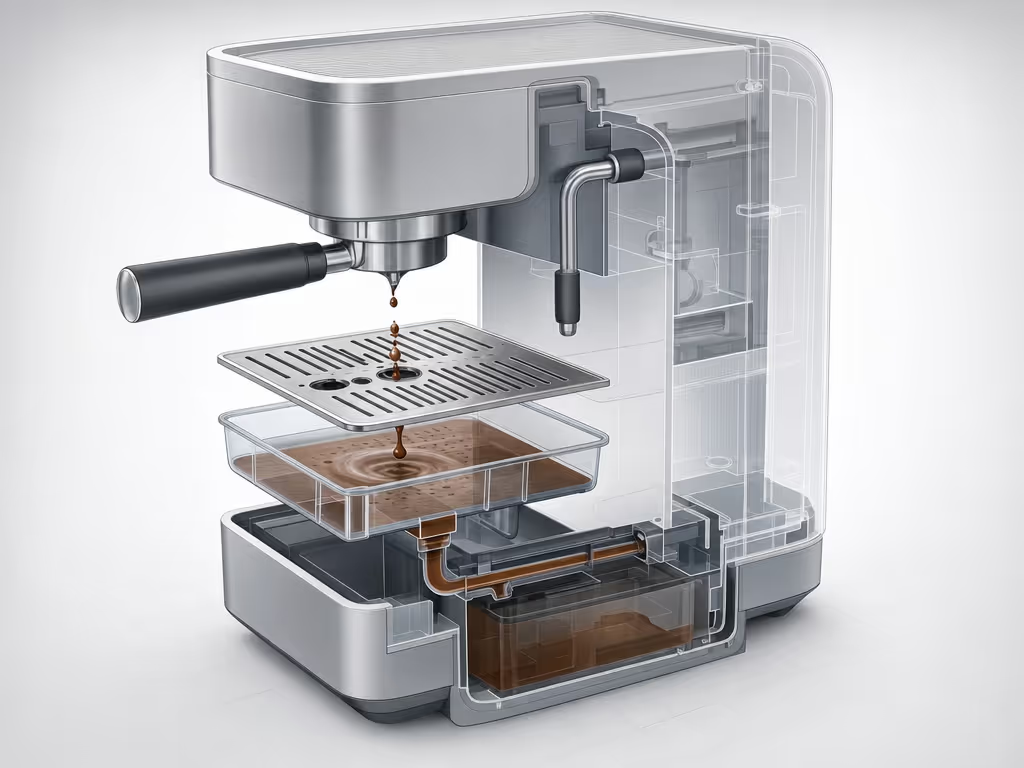
Coffee Dictionary describes an espresso-machine drip tray generally as a removable grate and reservoir positioned beneath the group head. It collects excess water, stray coffee grounds, and beverage overflow.
This definition establishes the tray as a containment component, not decorative counter trim. For a closer look at how capacity, materials, and flow dynamics affect water handling, see our espresso machine water reservoir guide. Assess the grate and reservoir as a single assembly. The collected evidence does not establish where rinse or cleaning-cycle water goes on a specific machine.
For a cleaner espresso cleanup workflow, assess the whole assembly rather than the visible grate alone:
- Can you see or otherwise monitor the reservoir level?
- Does the grate lift out without an awkward sequence?
- Is the reservoir accessible enough to empty and wipe according to the machine's instructions?
- Can the parts be returned to position reliably before the next use?
Those are operational questions, not luxury features. They also connect to the broader principles covered in our espresso machine cleaning science guide, where component-specific maintenance helps preserve performance.
FAQ Deep Dive: Which Design Details Matter Most?
Does the grate affect cleanup?
Yes, but the available evidence supports a tradeoff rather than a single winning pattern. Coffee Dictionary describes finer grate spacing as better able to catch debris, while wider spacing can be easier to rinse. Neither description establishes measured differences in splash reduction, cup stability, or cleaning time.
That limitation is important. Do not treat a tight-looking grate as proven drip tray splash control, or an open grate as proven easier in every kitchen. Instead, examine the grate as a part you will routinely handle. Fine openings may retain more small debris; wide openings may be more accessible during rinsing. Which matters more depends on your tolerance for those two tasks.
Do channels and slopes make a difference?
Sloped bases or internal channels are described as directing excess liquid toward the reservoir and helping prevent pooling. That is a sensible design intention, but there are no collected espresso-specific measurements showing how much any particular slope, depth, baffle, or grate height changes splashing or cleanup duration.
Use visible drainage paths as an inspection cue, not a performance guarantee. If liquid can be guided toward the reservoir rather than sit on a flat surface, the design is at least oriented toward containment. Its real-world result remains machine-specific.
Why do level indicators matter?
Floating indicators and marked grids are commonly described features that help users monitor reservoir level. They reduce the need to guess whether the reservoir needs attention.
For a time-constrained household, the benefit is informational: an observable level can prompt action before removal becomes an unpleasant surprise. It does not create a universal emptying schedule. No evidence supports a capacity threshold, a drinks-per-emptying formula, or a home-use target for machine drip tray capacity.
FAQ Deep Dive: How Should You Evaluate Machine Drip Tray Capacity?
Capacity is best evaluated as a workflow constraint, not a number to optimize in isolation. The available evidence does not provide comparable capacity measurements or a validated relationship between reservoir size and the number of drinks a household can prepare.
A disciplined assessment therefore avoids invented thresholds. When comparing machines, look for what can be established from the specific machine's documentation and the physical tray itself:
- Reservoir visibility: Is there an indicator, grid, or other clear way to observe the level?
- Access for emptying: Can the reservoir be removed and handled comfortably in your counter layout?
- Maintenance access: Can the grate and reservoir be inspected and cleaned as the manufacturer directs?
- Workflow fit: During your normal routine, do you prefer to monitor the tray frequently, or is direct drainage documented as an option for the exact machine and installation?
Industrial containment guidance makes a limited but useful general point: capacity should be considered alongside safe inspection, cleaning, and emptying. That principle does not establish an espresso-specific capacity requirement, but it is a strong reason to favor clarity and access over a reservoir volume claim alone.
FAQ Deep Dive: What Is Realistic Drip Tray Splash Control?
The evidence does not support declaring any espresso grate geometry "splash-proof." Nor does it quantify the effect of opening size, grate height, tray depth, or internal baffles on splashing.
A more defensible approach is to separate design intent from verified performance:
- A grate-and-reservoir assembly is intended to collect liquid and stray grounds beneath the group head.
- Slopes or channels may direct excess liquid toward the reservoir.
- Grate spacing involves a stated debris-capture versus rinsing tradeoff.
- No collected espresso-specific testing establishes a best anti-splash geometry.
This distinction prevents a common purchase mistake: treating a close-up product photograph as evidence of measured cleanup performance. For people who value predictable mornings, inspectability and ease of handling are more decision-useful than an unverified splash claim.
FAQ Deep Dive: How Does Backflushing Relate to Drain Management?
Backflush drain management begins with the machine manual, because procedures differ by machine design and applicability depends on whether the specific machine supports backflushing.
Manufacturer-published guidance from Meraki describes a water backflush as rinsing loose grounds and oils from the group. Its detergent procedure is described as addressing oils that water alone does not remove. For additional maintenance context, see our guide to preventing espresso oil buildup. In that stated method, a blind basket blocks forward flow so that water and detergent are pushed back through the group.
The practical sequence is deliberately narrow:
- Confirm that your specific machine supports backflushing.
- Follow its manufacturer's stated procedure, including any specified blind basket and detergent.
- After detergent cleaning, rinse with fresh water repeatedly until no detergent remains, as the procedure directs.
Do not presume where the discharged water goes on a particular machine. The available evidence does not establish whether backflush discharge enters the tray on all designs. Treat the tray level as something to observe during any cleaning operation, and let the machine's instructions govern the method.

FAQ Deep Dive: Is a Direct Drain Better Than Emptying a Tray?
Not universally. Direct drainage is a model- and installation-specific decision, not an automatic home upgrade.
As of September 10, 2026, Clive Coffee listed the LUCCA A53 Drip Tray Drain Kit as compatible for direct drainage with the LUCCA A53, La Spaziale Vivaldi, and Dream drip trays. At that time, the retailer described this specific kit as eliminating frequent manual tray emptying. This model-specific example shows that direct drainage can exist for particular machines; it does not show that a drain kit fits other machines, improves every household workflow, or is appropriate in every installation.
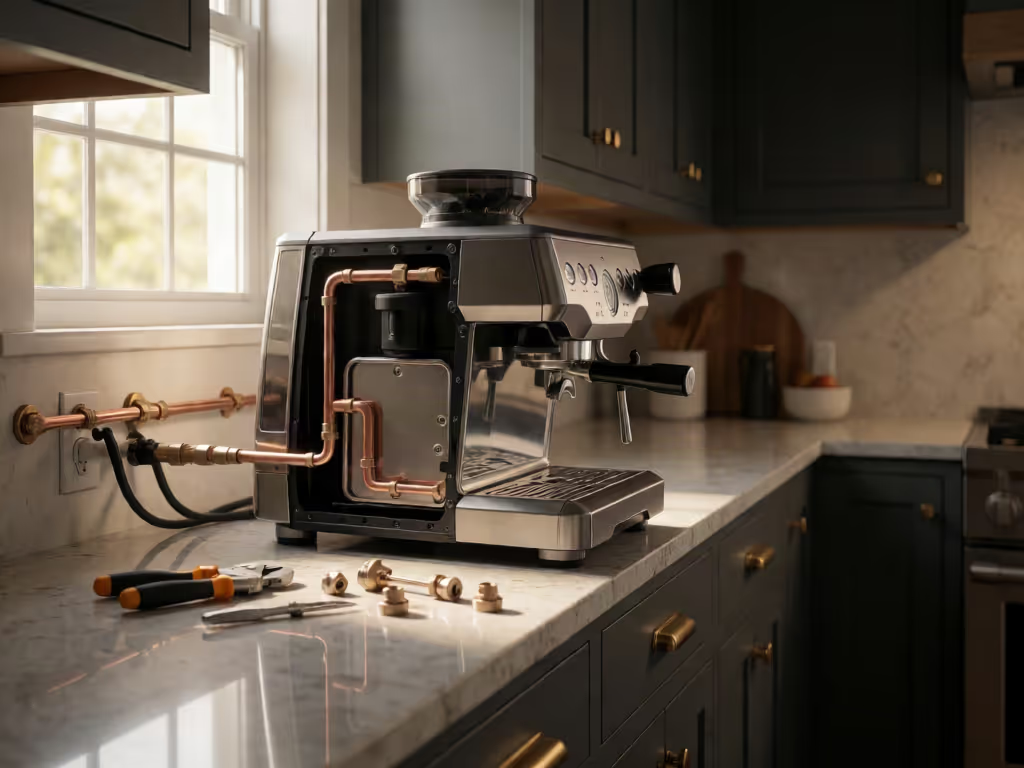
If this option is relevant, verify compatibility and installation requirements with the machine manufacturer. A direct-drain choice should be supported by the exact model's documentation rather than inferred from another machine's accessory. If you are considering a permanently plumbed setup, review our direct-plumbed espresso machine setup guide for installation requirements and ongoing maintenance considerations.
FAQ Deep Dive: Can You Use Something Else Instead of the Built-In Tray?
The evidence does not establish that any substitute for an espresso-machine drip tray is safe or suitable.
One home user has described disposing of pucks directly over a garbage pail, but that is an individual practice rather than a recommended workflow. Keep the decisions separate: Coffee Dictionary describes an espresso-machine drip tray generally as collecting excess water, stray grounds, and beverage overflow; puck disposal should follow the approach that is appropriate for your machine, household, and local disposal arrangements.
If a tray is missing or damaged, consult the manufacturer's documentation or support channel for the appropriate next step.
Summary and Final Verdict
A better espresso routine does not require turning drip-tray design into an engineering project. It requires evaluating the few characteristics that reduce predictable friction.
Final verdict: prioritize a removable grate and reservoir, clear level monitoring when available, accessible emptying, and cleaning procedures that are explicit for the exact machine. Treat channel descriptions as design intent rather than measured splash-control findings, and grate spacing as a debris-capture-versus-rinsing tradeoff. Consider direct drainage only when it is documented for the exact machine and installation. And keep backflushing strictly machine-specific.
The result is modest but valuable: fewer avoidable interruptions around the shot, a clearer maintenance sequence, and a coffee station that remains usable when the morning has no spare minutes.
Related Articles