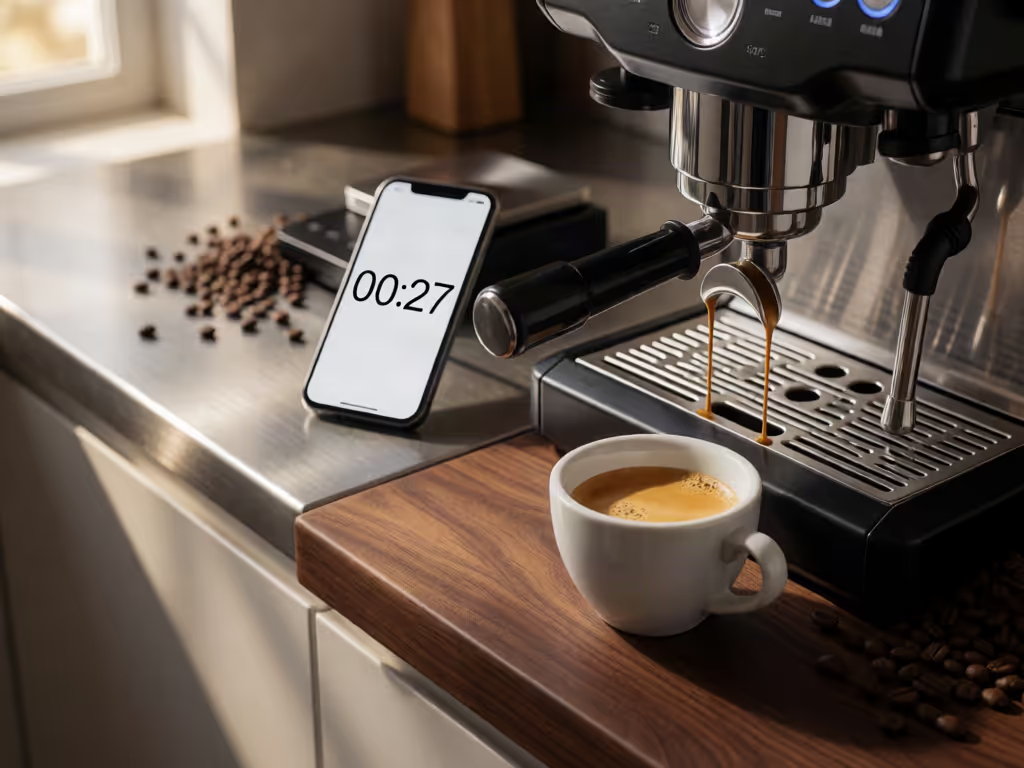
Espresso Machine Hot Water Spout Guide for Americanos
By Aisha Khan • 29th Sep
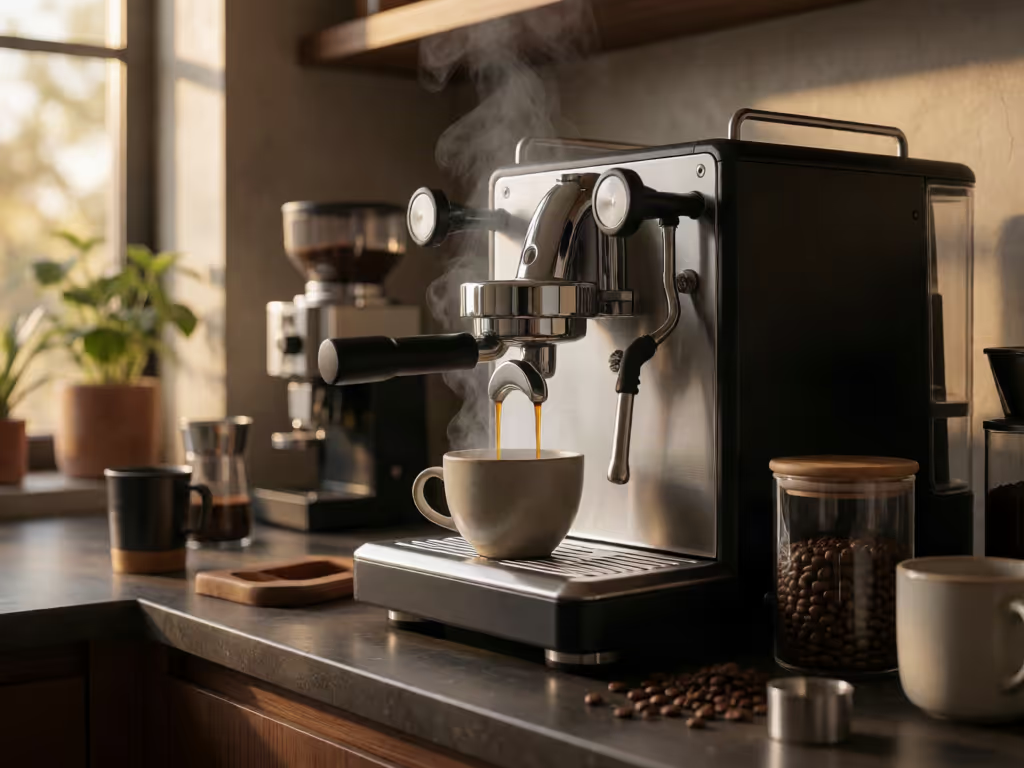
What to do
If your espresso machine’s manual documents a dedicated hot-water outlet for Americanos, use that function to add water, but follow your exact model’s instructions rather than assuming a universal sequence, temperature, or ratio.
- Start with: Identify the outlet, its control, and any safety or cleaning instructions in your manual. It may be labeled a hot-water spout or outlet.
- Then: Brew espresso using your established routine. Separately, follow the manual’s documented procedure for dispensing hot water, including any placement instructions; choose your preferred order and dilution by taste.
- Important prerequisite: Hot water can scald, and controls and maintenance vary by machine. Keep clear of the stream and use only your model’s operating and descaling guidance.
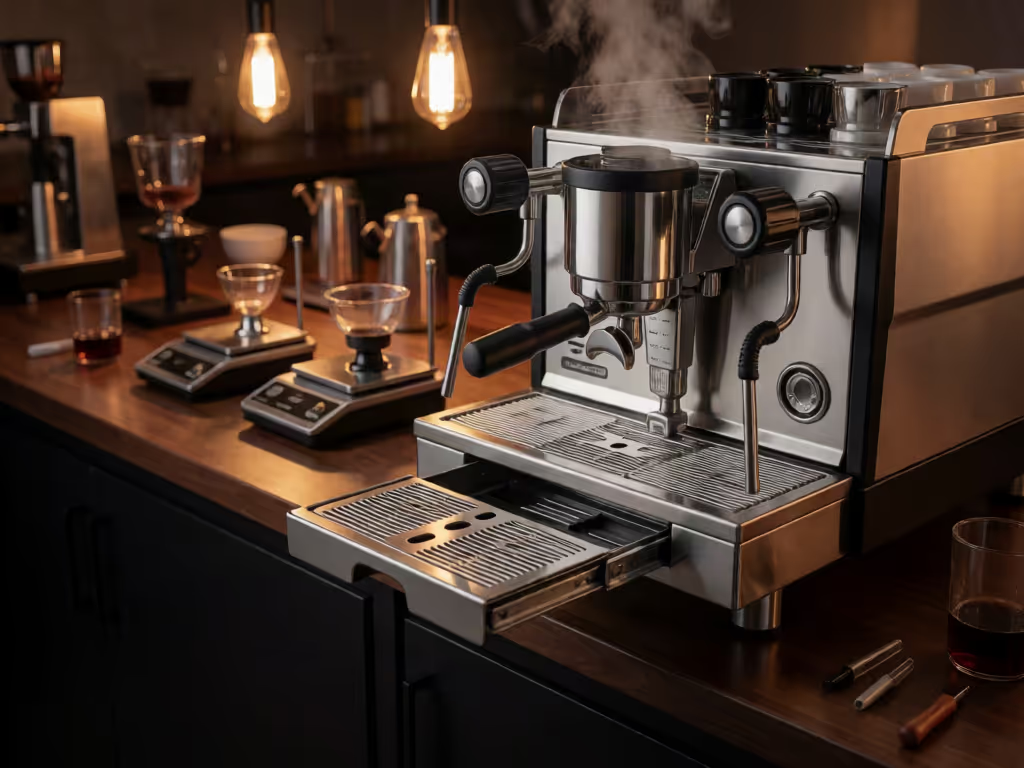
On UNIC automatic commercial espresso machines, the manufacturer says its dedicated hot-water outlet provides water for Americanos and helps streamline beverage service. For any other machine, your own manual—not that example—must determine whether and how its outlet is used. This espresso hot water outlet guide focuses on the part that varies most from machine to machine: finding, using, and maintaining the dedicated water outlet safely (without guessing at temperatures, button sequences, or settings your machine may not have).
The goal is simple: keep your established espresso process separate from the model-specific hot-water procedure, and use an outlet only as documented in your manual. Less guessing, more sipping. Your morning deserves frictionless espresso.
First, identify the right spout
The feature may be labeled a hot water spout or hot water outlet in your manual. In De'Longhi's La Specialista Opera descaling instructions, the coffee spout and hot-water spout are named separately. A manufacturer of commercial machines describes its dedicated outlet as a source of water for Americanos, tea, and preheating cups; that is a useful description of the feature for those machines, not a promise that every espresso machine operates the same way.
Before your first Americano, take 60 seconds to answer these three questions in your own manual:
- Does your manual document a dedicated hot-water function or outlet?
- Where does water leave the machine, and which control activates it?
- Does the manual give a specific warning, cleaning instruction, or container-placement instruction?
Controls are not standardized. For example, the Slayer Espresso V3 uses a push button located above its hot-water spout. Your machine may instead use a knob, touchscreen, menu option, detachable accessory, or another control entirely.
Treat the manual (not a video for another model) as the operating sequence for your hot water outlet.
Step-by-step: how to make an Americano with an espresso machine
This is deliberately a workflow guide rather than a recipe with universal numbers. The available evidence does not establish one best water-to-espresso ratio, serving temperature, or preferred order for adding water and espresso. Your machine and your taste decide the final adjustment.
Step 1: 0:00 Check the model-specific instructions
Review the instructions before positioning a cup or container. If your manual specifies placement for ordinary hot-water dispensing, follow it exactly rather than borrowing placement advice from another model or from a descaling procedure.
UNIC says the hot-water outlet on its automatic commercial espresso machines can also provide water for preheating cups. Do not assume this is available simply because another espresso machine offers it.
Quick win: Bookmark or photograph the manual page for the outlet so you do not have to search for the control sequence halfway through.
Step 2: 0:30 Prepare and brew your espresso as usual
Make the espresso according to your normal machine and dialing-in routine. This is the point where consistency is earned: the water used to extract espresso travels through the coffee puck, so extraction variables belong to your established espresso process.
Research on espresso extraction has found flow rate strongly affects the amount of measured coffee components in the cup. That finding applies to water moving through the coffee puck, not to water dispensed afterward from the hot-water outlet. In practical terms: troubleshoot a changing shot as an espresso-preparation issue first; do not assume the Americano water outlet caused it.
Step 3: 1:00 Use the dedicated hot-water function exactly as directed
Once espresso is ready (or before you brew it, if that is the sequence you personally prefer), use the machine's dedicated hot-water control as its manual instructs.
Use this short decision path:
- If your manual identifies a hot-water outlet: follow its stated control sequence and any placement instructions it provides.
- If the outlet is button-operated: do not transfer the button location from another model. Confirm yours first.
- If your manual does not document a dedicated hot-water outlet: use the approved method in your manual or heat water separately.
- If you use a pod espresso machine: check its manual particularly carefully for its documented operating procedure.
Use the control and outlet identified in your manufacturer’s instructions.
Step 4: 1:15 Manage the hot-water step as a safety task
Dispensing hot water carries a real burn risk. The Slayer Espresso V3 manual explicitly labels its hot-water spout a scalding hazard. That warning is worth carrying into any kitchen routine: keep hands and faces away from the outlet while dispensing, and follow your model’s operating instructions.
Avoid multitasking during this brief step. It is tempting to unload a lunchbox or answer a message while the machine runs, but this is one of those moments where ten seconds of attention reduces a much larger interruption later.
Family-friendly checkpoint: Tell anyone sharing the machine which control is for hot water and where the outlet is. Clear labeling lowers the chance that a rushed person experiments with the wrong knob or button.
Step 5: 1:30 Stop, taste, and record only what helps
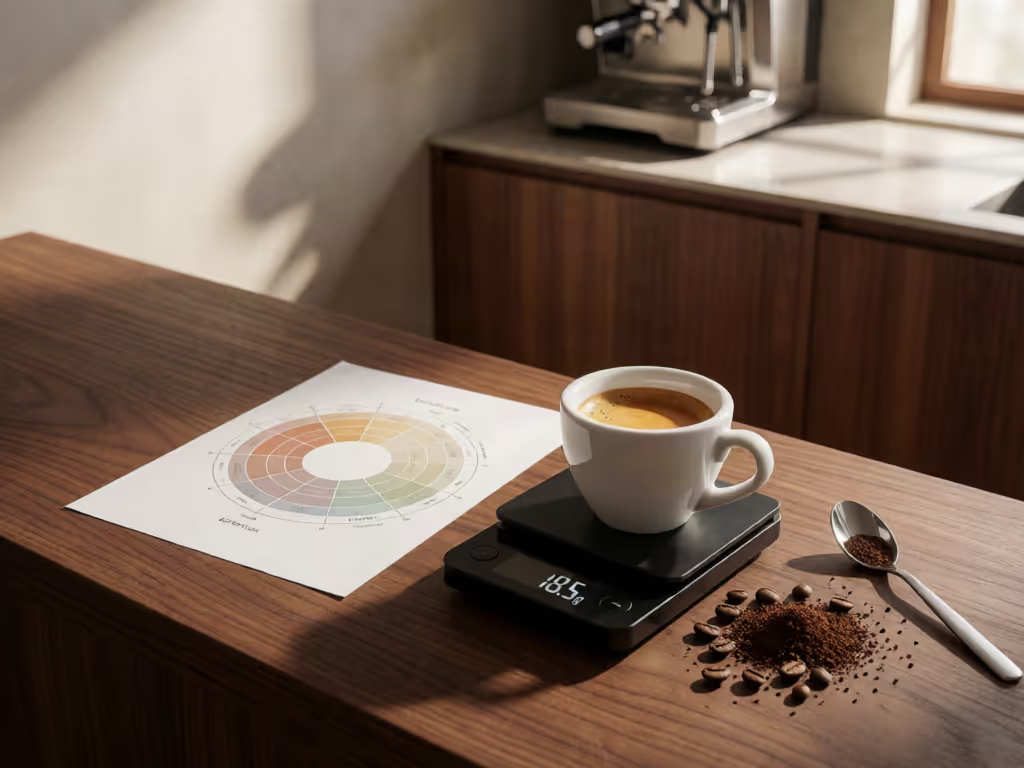
Stop the water according to your model's controls. Then taste the drink once it is safe to do so. Since there is no evidence-backed universal target for outlet-water temperature, dilution amount, or water-first versus espresso-first order, use your own notes rather than chasing an online "correct" answer.
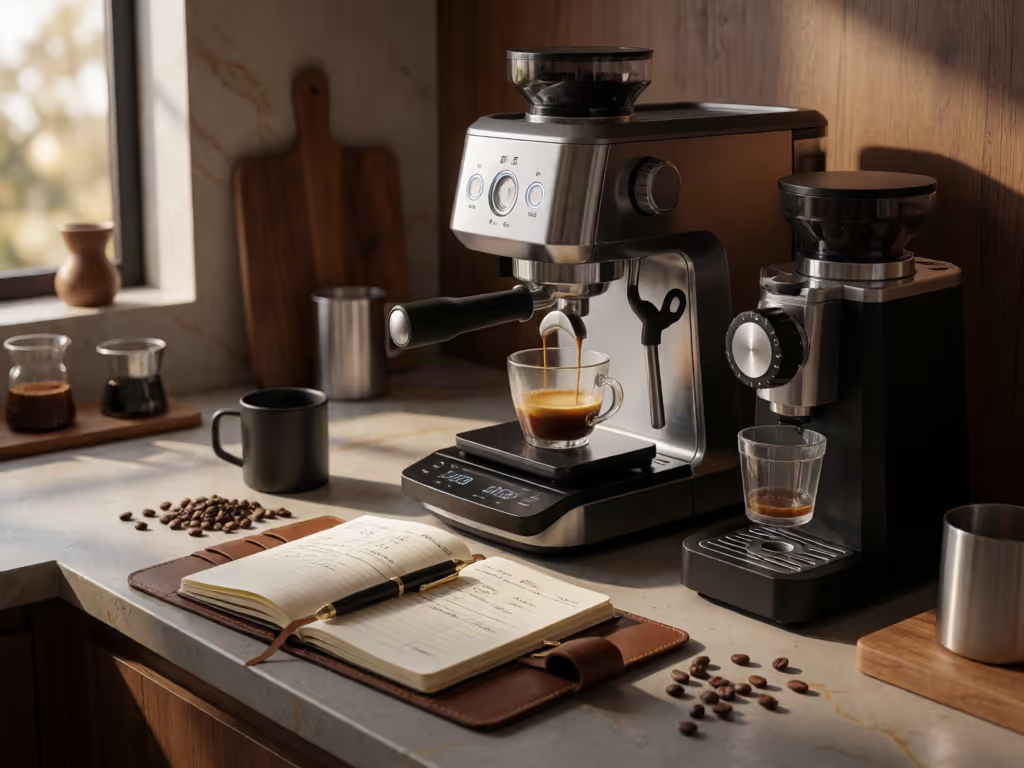
A low-effort note can be enough:
- Coffee used
- Your usual espresso setting
- Whether you wanted the finished drink more concentrated or more diluted next time
That is the kind of repeatability that reduces cognitive load. You are not trying to turn breakfast into a lab session; you are creating a dependable default.
What not to assume about espresso machine hot water temperature
It is understandable to want a precise number for espresso machine hot water temperature. But espresso-brewing temperature and hot-water-outlet temperature are different questions.
A study of espresso extraction describes a commonly recommended brewing-water range and examines how temperature and flow affect extraction through coffee grounds. It does not measure the temperature, flow, stability, or taste effects of water coming from an espresso machine's dedicated hot-water outlet after the espresso has already been made.
So, avoid these shortcuts:
- Do not use espresso extraction guidance as a target temperature for Americano dilution water.
- Do not make mechanical assumptions about how an outlet is plumbed or heated.
- Do not conclude that a hotter outlet will make a better Americano.
- Do not treat internet consensus about adding water before or after espresso as a proven quality rule.
The useful action is more modest: learn what your own machine delivers through its intended function, then adjust your drink to taste within the operating guidance for that machine—and consult your espresso machine water guidance alongside the care instructions for your model.
Keep cleanup and maintenance from becoming the hidden cost
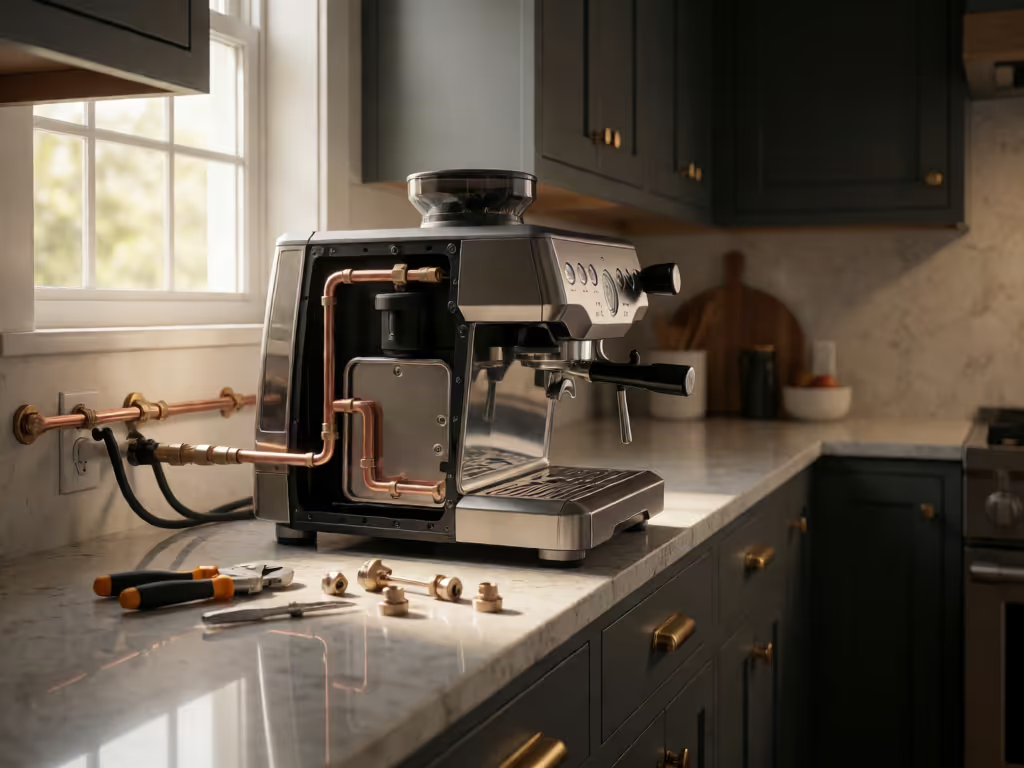
Cleaning and maintenance are model-specific. After dispensing, follow any cleanup instructions in your manual rather than creating a homemade regimen for the spout based on a different model's instructions.
Maintenance is especially model-specific, which is why machine-specific maintenance routines are more useful than a one-size-fits-all checklist. For instance, De'Longhi's descaling instructions for the La Specialista Opera call for containers under both the coffee spout and the hot-water spout, while another container sits beneath the steam wand. That shows why placement and liquid collection matter during a programmed maintenance cycle (but it is not a general descaling method or schedule).
Your low-friction maintenance checklist
- Follow the cleaning and descaling directions written for your exact machine.
- During any guided maintenance cycle, place containers where your manual specifies.
- Follow the care sequence specified for each component in your manual.
- If the function changes or a warning appears, pause and consult the troubleshooting section rather than forcing the control; our guide to fixing common espresso problems can help you investigate inconsistent results.
Build a calmer Americano routine
UNIC says the dedicated hot-water outlet on its automatic commercial espresso machines helps streamline beverage service without interfering with espresso brewing. That manufacturer claim is specific to those machines, not proof that the same sequence works on every espresso machine.
For your own setup, let the manual determine whether the outlet is intended for Americanos and how it should be operated. Controls, cleaning, and descaling remain model-specific, so your manual is the reliable next step.
Further exploration
Open your machine manual today and bookmark the pages for hot water, safety, and descaling. If it documents the outlet for Americanos, try the stated procedure without adding instructions borrowed from another model. Once the controls feel familiar, you can refine your preferred dilution by taste, without adding friction to tomorrow morning.
Related Articles