Espresso Shot Log: A Coffee Brewing Journal for Consistency
By Maya Desai • 2nd Sep
What to do
Build an espresso shot log around six fields: dose, yield, brew time, grind setting, preparation consistency, and taste. Use it as a controlled feedback loop to turn a good shot into a repeatable recipe.
- Start with: Record dose and yield in grams, brew time, your grinder setting, how you prepared the puck, and a specific sensory note.
- Then: Choose a starting dose and target yield, keep them steady, and change grind in small increments. Taste and record every shot so each result remains comparable.
- Important prerequisite: Keep distribution and tamping consistent, and add temperature, pressure, or pre-infusion only when you can measure or deliberately change them.
Important: Ratios and timing such as 1:2 and 25–30 seconds are reference points from surveyed practice, not universal rules; taste remains the final decision signal.
An espresso shot log is the shortest path from "that was good" to a repeatable weekday recipe. A coffee brewing journal turns each shot into a comparable record: what went into the basket, what came out, how long it took, and how it tasted. Instead of redialing from memory every morning, you build a personal reference for each coffee, grinder setting, and home espresso and coffee machine.
The goal is not to collect data for its own sake. It is to reduce variables until you can make a good decision quickly. Consistency beats charisma when the alarm is barely past snooze.
What should an espresso shot log track?
Start with the fields that make one shot meaningfully comparable with the next. Dose, yield, and brew time are the core espresso parameters. Add a reference to your grinder setup and a concise taste note so you can connect each adjustment with its sensory result.
One practical entry format
This editorial template combines supported dialing-in fields into a format you can adapt to your routine.
| Field | What to record | Why it earns a place |
|---|---|---|
| Date and coffee ID | Coffee name or your own label | Separates one coffee’s recipe history from another’s |
| Dose | Dry grounds in the portafilter, in g | Establishes the input |
| Yield | Espresso in the cup, in g | Establishes the output and concentration context |
| Brew time | Extraction time | Provides a flow reference |
| Grind setting | Your grinder’s grind setting | Makes the next adjustment reproducible |
| Taste | Sweetness, acidity, bitterness, dryness, finish, and overall preference | Keeps the data tied to the cup |
Its purpose is practical: capture enough information to compare shots without turning a 6 a.m. routine into a laboratory shift.
Useful optional fields
The 2017 Barista Guild of America survey examined brew ratio, basket size, pre-infusion, temperature, pressure, input dose, output weight, and extraction time. Depending on what you can measure or deliberately change, an editorial log can also include preparation consistency. Consider adding:
- Brew ratio
- Basket size
- Pre-infusion setting or duration
- Temperature setting
- Pressure observation
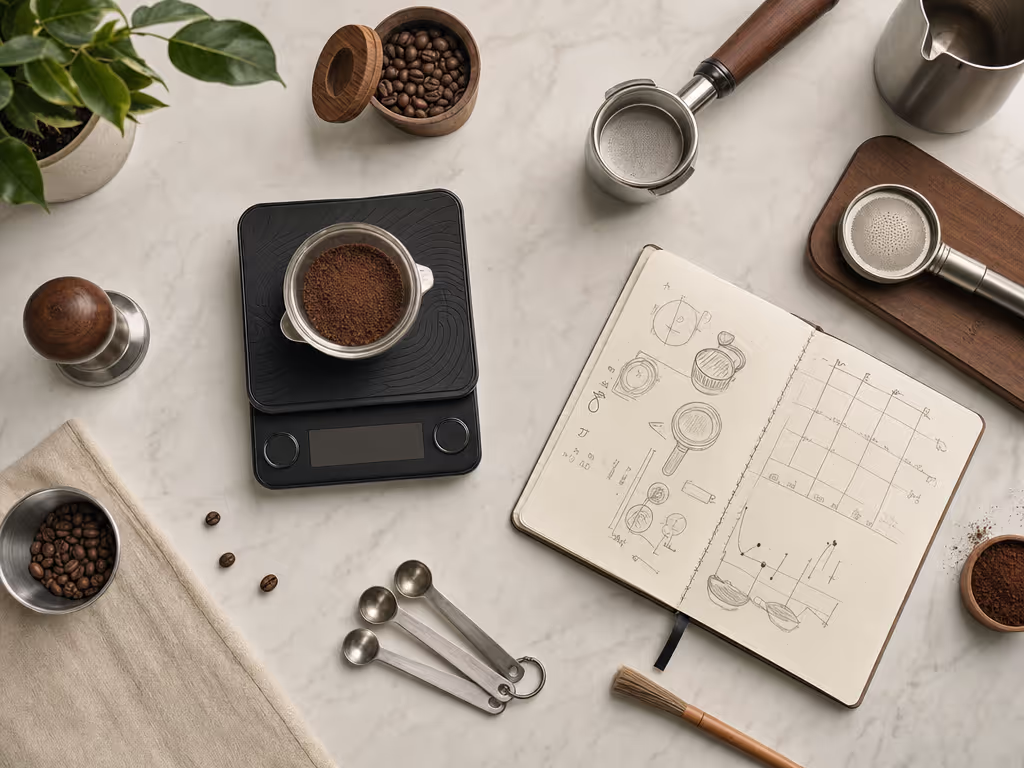
- A note that distribution and tamping were performed the same way
But a complete record is not necessarily a better record. If your machine does not measure pressure or temperature, leave those columns blank rather than guessing.
The best espresso data tracking system is the one you can complete before the shot is cold.
Why log grams rather than rely on volume?
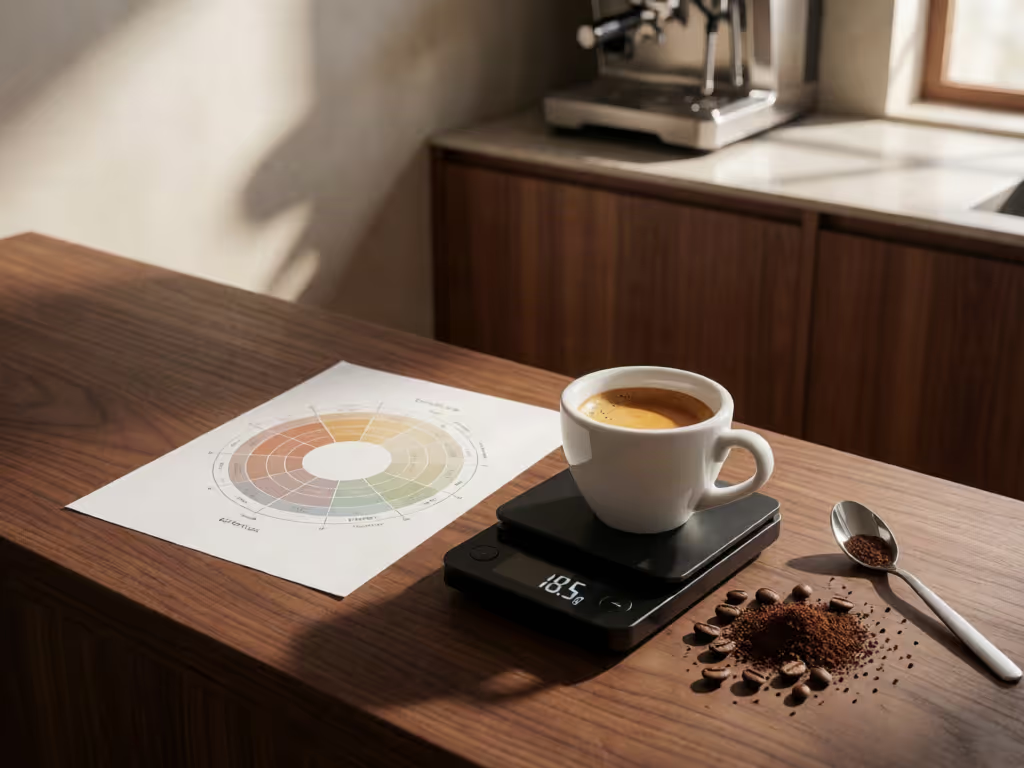
Record dose and yield in grams. Dose is the dry coffee mass; yield is the wet espresso mass. Recording both in grams allows you to calculate a brew ratio and repeat the relationship that produced a cup you enjoyed.
For example, an 18 g dose with a 36 g yield is a 1:2 brew ratio. That describes the relationship, not a promise of quality. In a 2017 survey summarized by the Specialty Coffee Association, respondents reported an average ratio of 1:2, with responses spanning 1:1.5 to 1:2.5. The same survey summarized average practices around an 18–20 g dose, 36.5 g output, 25 to 30 seconds, approximately 9 bar, and 200°F water.
Those figures are useful orientation points, not universal targets. Your log should preserve the recipe that tastes balanced to you with specific espresso beans and a setup.
Increasing yield means more water passes through the coffee, resulting in a less concentrated espresso. That makes yield a clear, intentional lever when you want to explore strength and balance. When you are adjusting grind, keep the desired yield constant so you can isolate that change.
How do you use a log to dial in without wasting coffee?
Use a controlled sequence. For a step-by-step approach to this process, see our espresso dialing-in guide. The critical rule is simple: change one parameter at a time. If you alter grind, dose, yield, and preparation simultaneously, it becomes easy to lose track of which change affected the result.
A five-shot, one-variable workflow
- Choose a starting recipe. Select a dose that suits your basket, then keep it fixed while you establish your baseline.
- Set a target yield. Pick an output mass and stop the shot at that weight. The 1:2 example is a reasonable reference point from surveyed practice, not a required destination.
- Prepare the puck consistently. Keep coffee-bed distribution and tamping method the same. Uneven distribution or an inconsistent tamp can affect extraction, so this is control work (not decoration). Our guide to espresso puck preparation explains how distribution and tamping technique support more repeatable extraction.
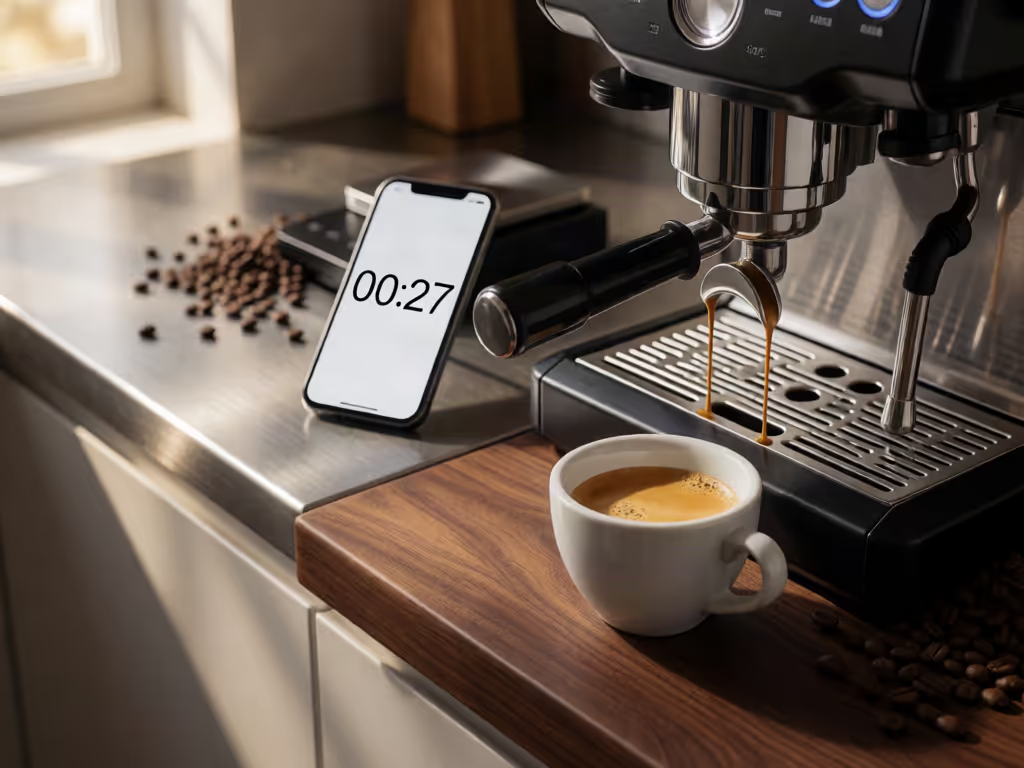
- Record time and taste. A timer is useful only when paired with the dose, yield, and sensory result.
- Adjust grind in a small increment, then repeat. A finer grind slows water flow; a coarser grind speeds it. Hold dose and yield steady during this experiment so your next result is interpretable.
This produces a clean brew recipe history. After a few entries, you will know not merely that "setting 4 was good," but that it was good at a defined dose, yield, time, and taste outcome.
What should you write in the taste note?
Write a sensory observation, not a verdict alone. "Bad" offers no next step. "Low sweetness, sharp acidity, quick finish" does.
A fast note can follow this structure:
- Sweetness: low / medium / high
- Acidity: muted / lively / sharp
- Bitterness or dryness: none / present / dominant
- Finish: short / clean / hollow / lingering
- Overall: keep, adjust finer, adjust coarser, or revisit later
Sour or salty notes, low sweetness, and a quick finish can be useful cues to investigate under-extraction. If those cues persist after you review the log, use this espresso troubleshooting guide to investigate sour, bitter, or inconsistent shots. Bitterness, dryness, and a hollow finish can be cues to investigate over-extraction. Treat both as hypotheses, not diagnoses. Coffee, recipe, and preparation all matter; taste is the decision signal your measurements are trying to support.
A compact entry format
Coffee:
Dose:
Yield:
Ratio:
Brew time:
Grind:
Prep:
Taste:
Decision:
That is enough to make tomorrow’s shot deliberate. You do not need an elaborate scorecard to preserve taste consistency over time.
Should you log machine temperature and pressure?
Only if the fields help you make a decision. On a machine with controllable temperature, record the setting when you deliberately change it. When pressure is a parameter you can measure or deliberately change, record it when it differs from your normal routine.
Use the entries as part of a controlled comparison: hold the conditions you can steady, change one parameter at a time, and taste the result.
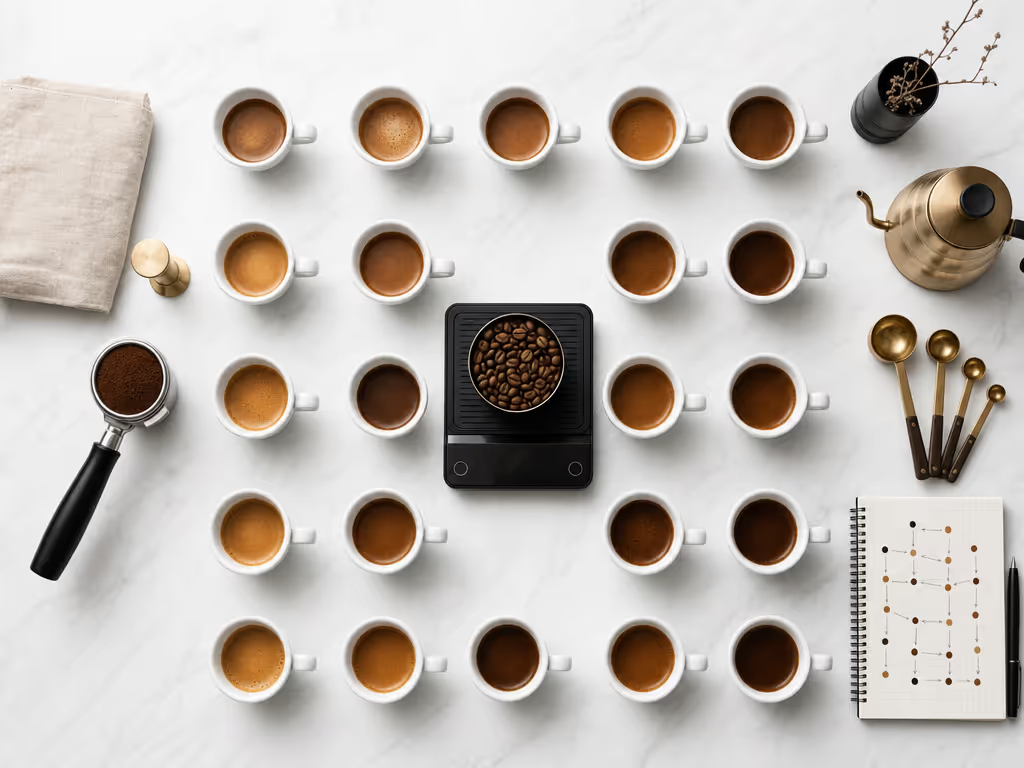
Repeated entries can make information and trends easier to visualize. That is why I prioritize a log that exposes variance over a clever one that captures every possible field.
Paper or app: which coffee brewing journal works better?
The collected evidence does not compare paper logs and apps for effectiveness. Choose the format that minimizes friction in your actual routine.
Paper is a strong choice when you want
- One page visible beside the grinder
- A fixed, distraction-free template
- A fast reference to yesterday’s recipe
An app is useful when you want
- Searchable history across several coffees
- Automatic ratio calculation
- More optional fields without redesigning a page
As of September 2, 2026, Beanconqueror’s official site stated that the app supports customizable espresso records and can record and adjust more than 30 brewing parameters, including grind size, brew time, and water amount. The site also stated that brewing data is stored locally and the app operates entirely offline; back up any local log before uninstalling it. It listed support for compatible Bluetooth scales, pressure devices, temperature devices, and a refractometer. Those vendor-described features and device-specific integrations may change.
Advanced metrics are optional. A refractometer can measure total dissolved solids (TDS), and TDS plus input and output weights can be used to calculate extraction yield. But extraction numbers should complement your tasting notes, not overrule them. Even a large individual espresso dataset with hundreds of shots used subjective scoring calibrated to that author’s preferences.
FAQ
Is an espresso shot 1 or 2 oz?
Neither label is universally definitive. A heritage espresso definition quoted by the SCA specifies 25 to 35 ml of beverage. In the 2017 Barista Guild of America survey, 82% of respondents used weight to measure espresso yield. For logging, record yield in grams. It gives you a consistent way to note your own recipes rather than trying to settle the 1- versus 2-oz question.
What is the golden rule of espresso?
There is no single golden rule that applies to every coffee, basket, grinder, and machine. A 1:2 ratio and a 25 to 30 second extraction are useful reference values from a surveyed group, while a separate heritage definition gives a 20 to 30 second range. Treat these as starting coordinates. Your repeatable target is the recipe that delivers the flavor you want across successive shots.
Summary and final verdict
A good espresso shot log is a controlled feedback loop, not a performance report. Record dose (g), yield (g), brew time, grind setting, preparation consistency, and taste. Keep dose and target yield fixed while testing grind changes. Add temperature, pressure, and pre-infusion only when you can measure or change them deliberately.
Final verdict: Begin with six fields and use the log for every new coffee until you have two or three repeatable, good-tasting entries. Then preserve that recipe as your baseline. When a morning shot drifts, you will have evidence to work from, not another round of guesswork.
Related Articles