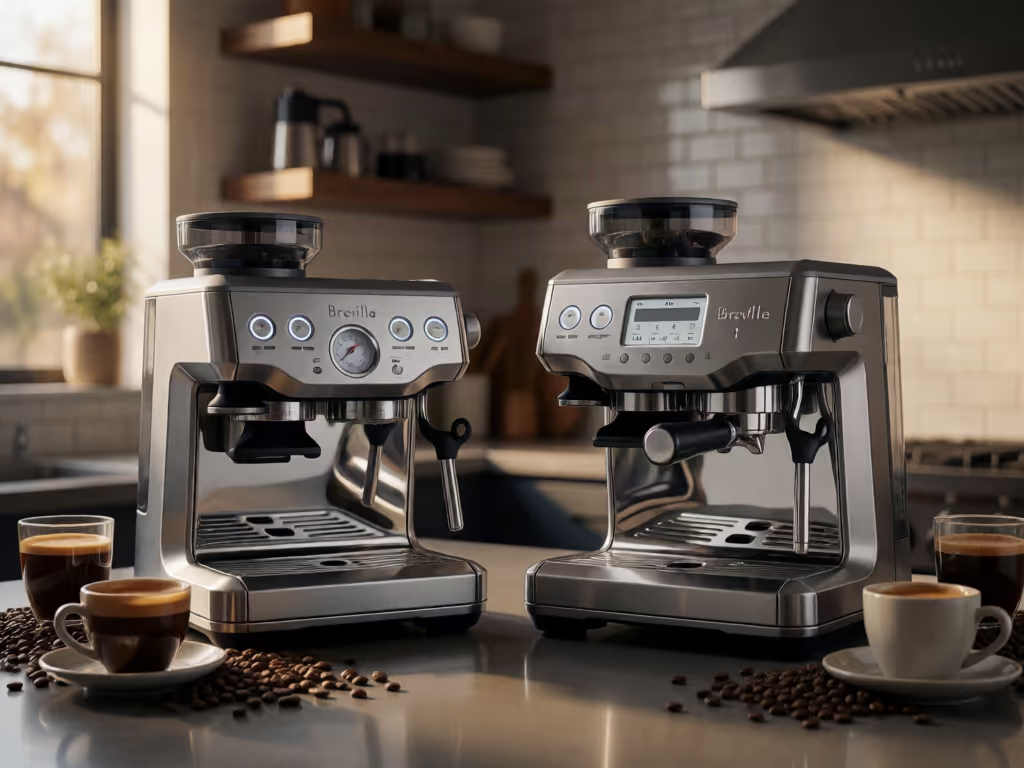
Philips 3300 Espresso Machine Review and Buying Guide
By Aisha Khan • 24th Nov
Bottom line
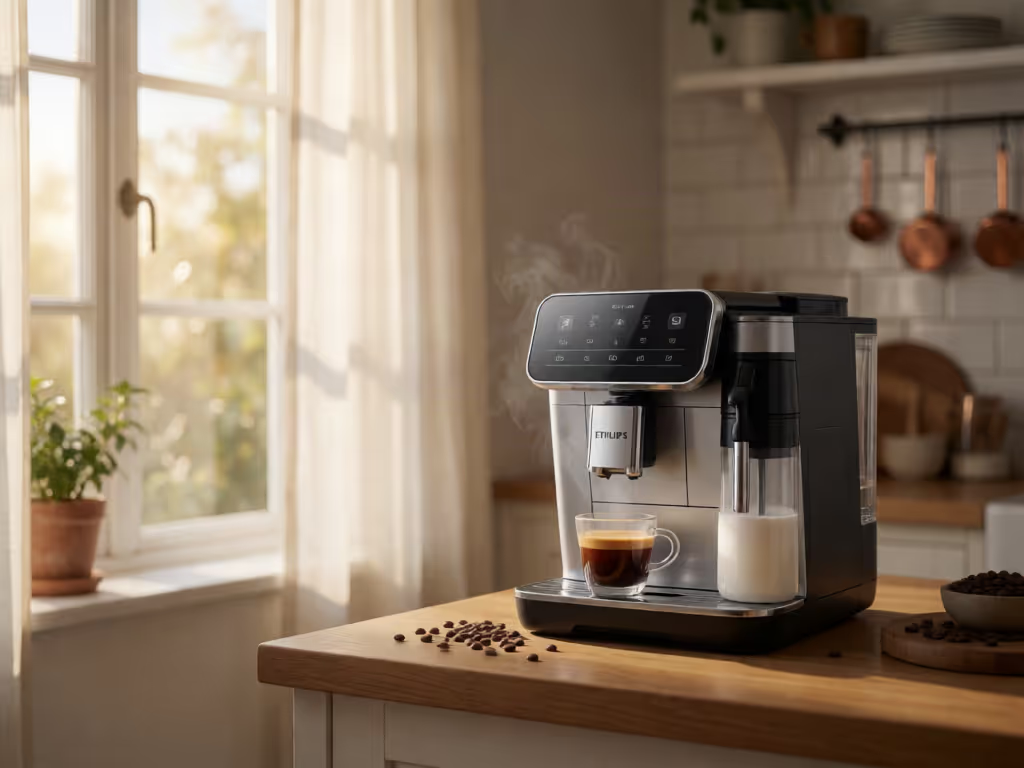
The Philips 3300 Series EP3326/90 suits households wanting automatic bean-to-cup coffee without giving up control of milk preparation. It grinds, tamps, and brews automatically, with five listed presets and adjustable strength and volume—but its classic milk frother makes milk drinks a separate manual step.
- Best for: Coffee drinkers who value a focused menu of espresso, coffee, espresso lungo, iced coffee, and hot water, and are comfortable cleaning and using a classic frother. View on Amazon
- Skip it if: You specifically want a confirmed one-touch cappuccino system or a LatteGo milk container.
- Main limitation: There is no independent testing here for taste, noise, milk texture, cleaning speed, reliability, or value.
Important: The retailer’s 40% quieter and up-to-5,000-cups claims are conditional or insufficiently documented, not independent ownership guarantees.
This Philips 3300 espresso machine review takes a practical look at the Philips 3300 Series EP3326/90 for households that want a bean-to-cup routine with fewer decisions before work. This Philips 3300 buying guide focuses on the details that shape a real morning: the drinks you can select, what you still do manually for milk, and the cleaning tasks that belong in the routine. The short version: it is a fully automatic espresso maker built around automatic grinding, tamping, and brewing, but it is not a one-button milk-drink system.
The Philips 3300 Series EP3326/90 offers five preset options: espresso, coffee, espresso lungo, iced coffee, and hot water, plus adjustable beverage strength and volume. For a household where one person wants a stronger coffee while another wants a longer cup, that customization is more meaningful than an intimidating menu of rarely used recipes.
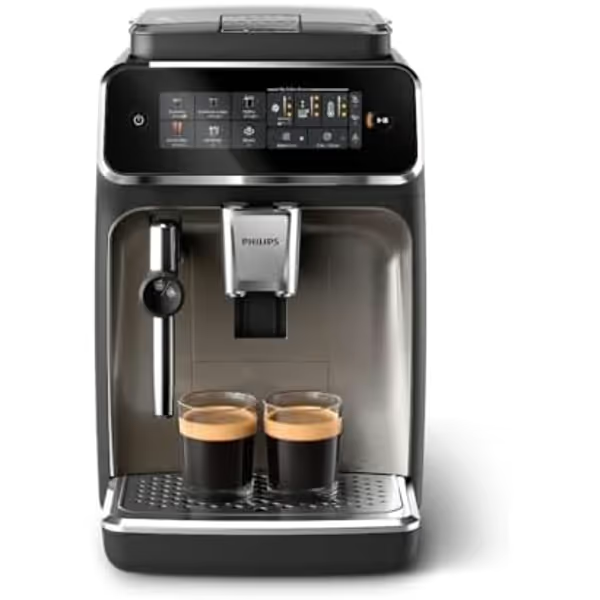
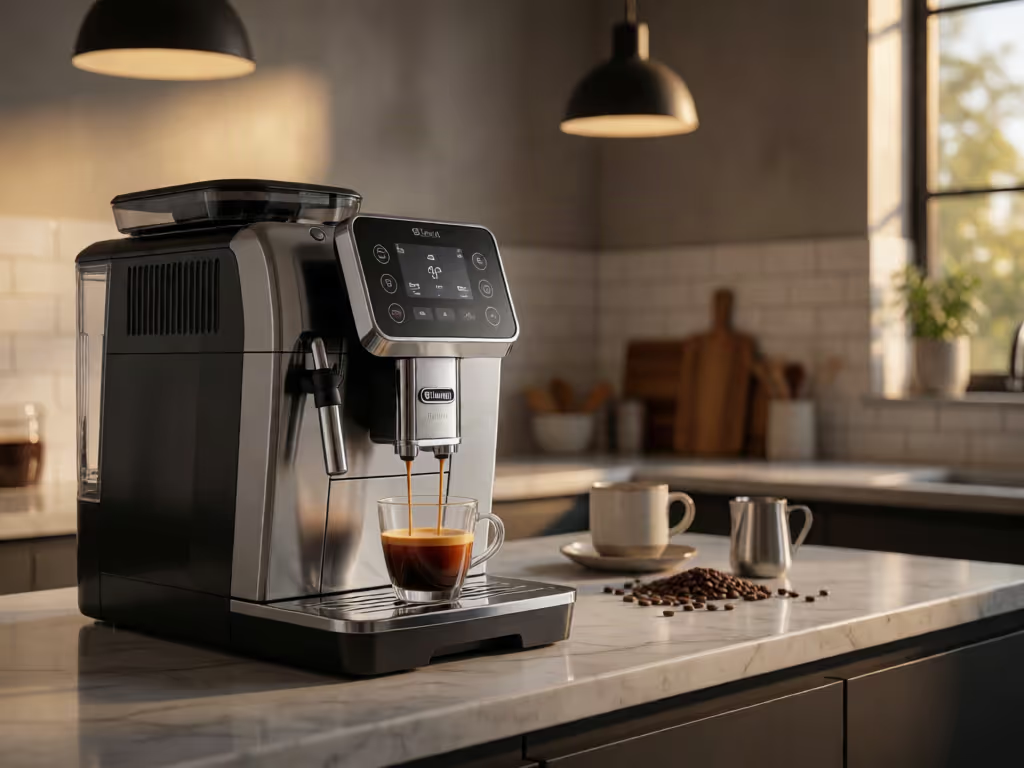
Philips 3300 Fully Automatic Espresso Machine
Effortless one-touch café-quality coffee with 5 presets and quiet brewing.
Noise Level40% Quieter SilentBrew
Noise Level40% Quieter SilentBrew
Pros
One-touch brewing for 5 drink types
Easy milk frothing for lattes and cappuccinos
AquaClean filter reduces descaling to 5,000 cups
Cons
Fully automatic limits hands-on control
May lack advanced customization for connoisseurs
At a glance: who the Philips 3300 Series EP3326/90 suits
Think of this machine as a fit for the person who wants the coffee portion of the routine handled automatically but is comfortable taking an active role with milk. Its basic workflow is simple: choose a drink, let the machine grind, tamp, and brew, then use the classic milk frother when you want steamed or frothed milk.
It may fit your home if you want:
- Bean-to-cup coffee without separately measuring, grinding, tamping, or extracting each drink.
- Five direct drink choices that cover espresso, coffee, espresso lungo, iced coffee, and hot water.
- Adjustable strength and volume rather than a fixed output every morning.
- A classic milk frother for dairy milk or plant-based alternatives.
- A removable brew group and a maintenance routine you are willing to follow.
Pause before buying if you need:
- A confirmed one-touch cappuccino program. This is not confirmed for this model.
- A milk container system. The EP3326/90 uses a classic milk frother, not a LatteGo container.
- Proven claims about cup quality, milk texture, noise level, cleaning speed, reliability, or repair support. Those need hands-on testing and long-term ownership evidence that is not available here.
- Exact confirmation that it fits a particular shelf or counter. Verify measurements and leave room for opening, filling, and maintenance before ordering.
Less fiddling, more sipping. Your morning deserves frictionless espresso.
That phrase should not be confused with "no upkeep." A machine can reduce the number of morning decisions while still asking for sensible care at the sink. The better question is whether its required steps fit your household’s actual rhythm.
What this automatic espresso coffee maker is designed to do
The strongest case for the EP3326/90 is its defined coffee workflow. It is a fully automatic bean-to-cup machine: at the push of a button, it automatically grinds, tamps, and brews. It also includes touch controls, a color display, a built-in ceramic grinder, an integrated hot-water system, a removable water tank, and a removable drip tray.
That translates to a practical division of labor. The machine takes care of the coffee preparation sequence; you decide the drink, strength, and volume, and you handle milk separately when milk is part of the cup.
The five listed presets
The five listed presets are:
- Espresso
- Coffee
- Espresso lungo
- Iced coffee
- Hot water
This is a focused menu, which can be a strength in a busy kitchen. At 7:15 a.m., a clear choice between espresso, coffee, espresso lungo, iced coffee, or hot water can be easier to live with than sorting through a screen full of drinks. The iced-coffee option is a preset, though that alone does not establish how cold, strong, or balanced the finished iced drink will be.
For households with varied preferences, start with the drinks you will actually use. If everyone mainly reaches for coffee and espresso, the menu aligns neatly. If your household expects automatic milk recipes at the press of one button, the classic frother is the important difference, not a minor footnote.
Personalization without a deep settings project
You can adjust strength and volume. That is useful if-then guidance:
- If your coffee feels too mild for your preference, use the available strength adjustment before changing your entire bean supply.
- If the default serving feels oversized or undersized for your everyday mug, use the volume adjustment.
- If several people use the machine, agree on a simple household baseline first. A dependable shared setting usually creates less weekday friction than constant re-adjustment.
Grinder settings and drink personalization are available, but this exact variant does not publish a specific grinder-setting count or the exact adjustment range. Avoid choosing the machine based on a precise number you may have seen for another Philips variant. Focus on the workflow you will actually use.
The milk workflow: the key buying decision
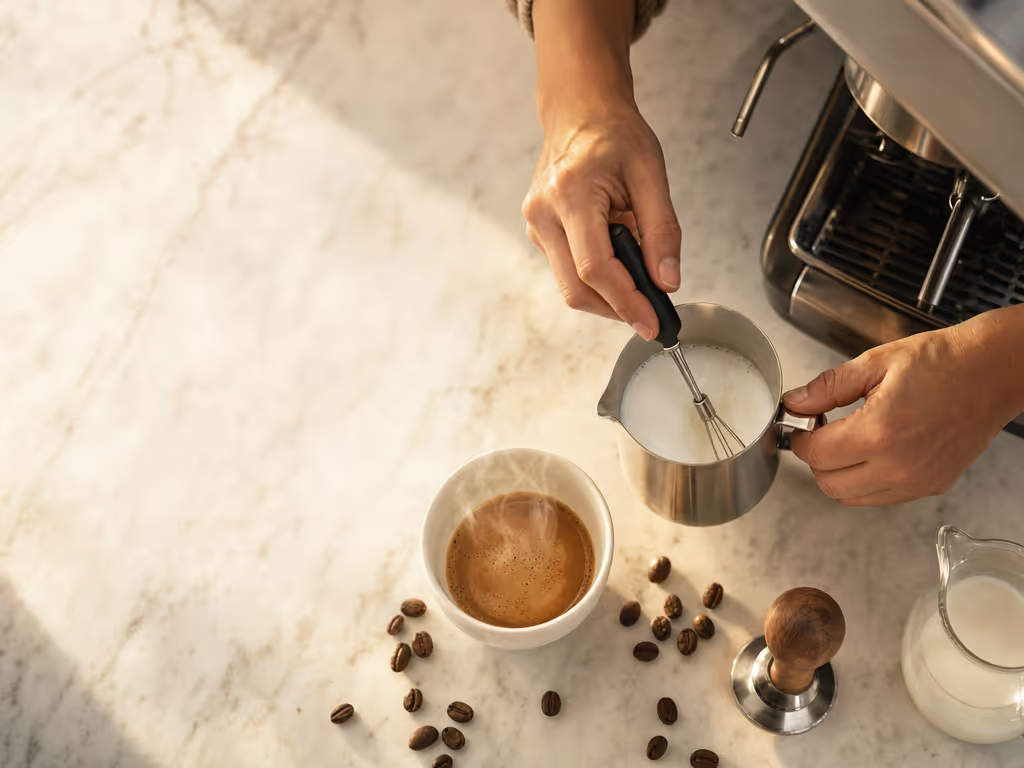
The Philips 3300 Series EP3326/90 uses a classic milk frother. For practical techniques that improve foam quality and consistency, see this milk steaming guide for beginners. It can steam or froth milk and plant-based alternatives. In everyday terms, that means you make the coffee and then froth milk as a separate part of the drink-building process.
This may be a good match for someone who likes choosing how much milk to add, serving hot chocolate or matcha with frothed milk, or keeping the machine’s drink menu centered on coffee rather than automatic milk recipes. It also creates a clear stopping point: coffee is done, milk is your next action.
Do not buy this model assuming an automatic cappuccino appears from a dedicated one-touch preset. You can use the classic frother to prepare milk for a cappuccino-style drink, but a one-touch cappuccino program is not confirmed.
A low-stress milk-drink sequence
Use a repeatable sequence rather than improvising when the kitchen is already busy:
- 7:20: Select espresso, coffee, or espresso lungo and let the machine complete its coffee cycle.
- 7:22: Froth or steam your milk with the classic frother.
- 7:24: Combine the milk and coffee, then clean the frother before you walk away.
Those timestamps are a sequence, not a claimed preparation-time test. Their purpose is to prevent the classic morning failure mode: milk residue becoming the "later" task that waits until lunch.
I once shadowed a family on a winter weekday (two kids, one meeting, and scarcely eight minutes to spare). The machine that looked more impressive on a quiet weekend created a louder, splashier trail when the clock was running. The better fit was the one whose steps stayed obvious. That is the lens to use here: not maximum features, but whether the workflow stays calm when everyone needs something at once.
Cleanup and maintenance: what belongs on your checklist
A fully automatic machine is still a food-and-water appliance. Because maintenance needs vary by machine type, this espresso machine maintenance guide can help you build a routine suited to an automatic model. It earns a place in a friction-light routine only when care tasks are treated as part of ownership rather than as surprises.
Plan on these maintenance categories:
- Cleaning the classic milk frother after every use.
- Daily cleaning of the classic milk frother.
- Removing and reinserting the brew group.
- Cleaning the brew group under the tap.
- Cleaning the brew group with coffee-oil-remover tablets.
- Lubricating the brew group.
- AquaClean filter setup and replacement prompts.
- Water-hardness settings and a descaling procedure.
Descaling takes about 30 minutes. Put that in the calendar as a household task rather than initiating it five minutes before a meeting. For brew-group cleaning, tablets, and lubrication, follow the instructions supplied with your machine, since schedules can vary by usage and water conditions.
The practical ownership checklist
After a milk drink
- Clean the classic milk frother as directed.
- Check the drip tray and grounds area during your usual kitchen reset.
During a weekly kitchen reset
- Review the instructions for the removable brew group and drip tray.
- Keep an eye on prompts rather than ignoring them until a rushed morning.
When the machine prompts you
- Replace the AquaClean filter according to the machine’s instructions.
- Follow the guided descaling process when required.
Replacing the AquaClean filter when prompted can mean no descaling for up to 5,000 cups. Treat "up to" as conditional, not as a guaranteed interval; replacing the filter when prompted is part of the claim. The useful takeaway is that filter changes are part of the machine’s maintenance design, not an optional accessory purchase to forget about.
What the noise claim does, and does not, tell you
Marketing materials claim SilentBrew technology reduces machine sounds by 40 percent compared with previous models. That may be worth investigating if early-morning noise is a deal-breaker, but it is not enough to call the machine quiet in your kitchen. The baseline model, test method, and measured sound level are not provided.
If sound is non-negotiable: listen to a current demonstration of the EP3326/90 where possible, consider your room’s acoustics, and ask about return terms before purchase. Grinder and brewing sounds can feel very different in an open-plan apartment than in a closed kitchen.
Philips 3300 vs. a traditional espresso machine: choose the routine, not the romance
A traditional espresso machine may appeal if your goal is a more manual coffee ritual. The Philips 3300 Series EP3326/90 is oriented differently: its stated value is automatic grinding, tamping, and brewing from beans, with strength and volume adjustments afterward.
Here is the decision boundary:
| Your morning priority | Better alignment from the documented EP3326/90 workflow |
|---|---|
| Fewer coffee-prep steps | Strong fit: grinding, tamping, and brewing are automatic. |
| A small preset menu | Strong fit: five listed options cover core coffee and hot-water needs. |
| Hands-on milk preparation | Fit, provided you are happy using the classic frother and cleaning it after use. |
| One-touch automatic milk drinks | Not established for this model. |
| A verdict on espresso flavor versus manual equipment | Not possible from the available information. |
This is why wattage, bar numbers, and feature lists should not be the first filter. This model is rated at 15-bar pressure, but that number does not replace a taste test or tell you how the machine will fit into your particular coffee routine. Workflow comes first.
How to decide before you buy
Use this final check before committing to the Philips 3300 Series EP3326/90.
1. Write down your household’s top three drinks
If they map to espresso, coffee, espresso lungo, iced coffee, and hot water (with optional manually frothed milk), the machine’s built-in menu is relevant. If your list is mostly one-touch milk beverages, stop and confirm another model’s exact milk system before buying.
2. Walk through the milk cleanup honestly
Ask: "Will I clean the classic frother after each use?" If the answer is yes, the workflow can be manageable. If the answer is realistically no during the weekday rush, do not let a polished display distract from that mismatch.
3. Reserve space for access, not just the machine body
Check the exact-model measurements. Measure your counter, cabinet clearance, and the room needed to remove the water tank, drip tray, and brew group. Then verify the dimensions for the EP3326/90 rather than borrowing dimensions from another 3300 machine.
4. Treat ownership supplies as part of the purchase
Plan for filters, descaling, and brew-group care. A machine becomes less disruptive when its supplies are on hand before an alert appears.
5. Verify the listing details at checkout
Confirm the model number is EP3326/90 and that the description names a classic milk frother. Product descriptions can vary, and stray "LatteGo" wording in some copy should not be taken as confirmation of a milk container.
FAQ
What is the difference between the Philips 3300 and 4400?
Without up-to-date side-by-side details, a reliable comparison is not possible here. Before deciding between them, compare current information for the exact variants you are considering, especially drink presets, milk system, cleaning instructions, dimensions, and return terms.
Is the Philips 3300 Series EP3326/90 a LatteGo machine?
For this exact model, rely on the details that specify a classic milk frother. If you see "LatteGo" mentioned in generic copy, do not assume this EP3326/90 includes a LatteGo container.
Does it make iced coffee?
Yes, iced coffee is one of the five presets. That confirms the option exists; it does not independently verify the finished drink’s temperature or taste.
Final recommendation: buy for the sequence you will repeat
The Philips 3300 Series EP3326/90 is most compelling for someone seeking a structured bean-to-cup path from fully automatic espresso makers to espresso, coffee, espresso lungo, iced coffee, or hot water, plus the flexibility to froth milk manually. Its promise is not that every task disappears; it is that the core coffee sequence becomes more direct.
Your actionable next step: write your normal weekday coffee sequence in five lines (from entering the kitchen to wiping the counter). If automatic grinding, tamping, and brewing remove the steps you dislike, while manual milk frothing and after-use cleaning feel realistic, the EP3326/90 deserves a closer look. If those milk and maintenance steps already sound like a chore, keep shopping. The right machine should fade into the morning, not become another thing your household has to manage.
Related Articles